
Company




Proud ELCINA Member
Electronic Industries Association of India
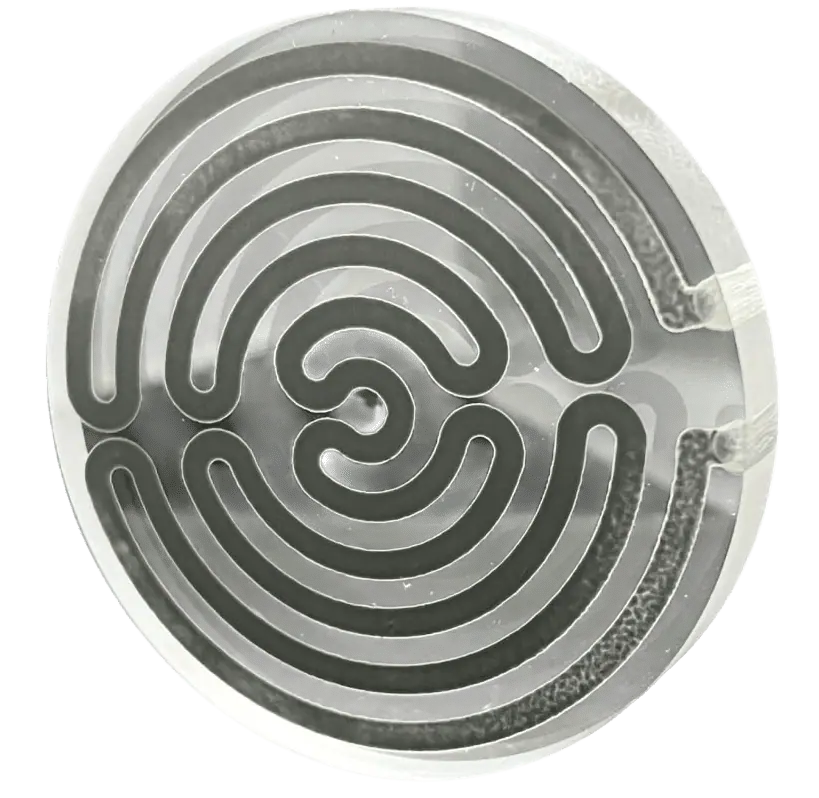
96% alumina is the most widely used substrate material for general-purpose, cost-sensitive designs. 99.6% alumina provides higher purity, lower dielectric loss, and tighter tolerances, relevant where RF performance or fine-feature metallization is a priority. Sapphire, as single-crystal Al₂O₃, provides a further step up in surface quality and electrical loss, with its own cost and processing profile.
Aluminum nitride is used when heat dissipation is the limiting factor in a design. The standard 170 W/(m·K) grade covers most high-power designs. The 200 and 230 W/(m·K) grades provide additional thermal headroom for designs operating close to their thermal limit.
Silicon nitride provides high mechanical strength and resistance to thermal cycling, with thermal conductivity that varies considerably by grade. Zirconia-based ceramics — zirconia, YSZ, and zirconia-toughened alumina — are selected primarily for fracture toughness; thermal conductivity is low for zirconia and YSZ, while zirconia-toughened alumina remains closer to standard alumina in this respect. Fused silica, quartz, high-K dielectrics, technical glasses, and ferrites address more specialized requirements, from millimeter-wave substrates to ceramic-to-ceramic bonding and RF components.
This list covers the materials used most frequently. For a material not listed here, contact the engineering team to discuss options.
The alumina family covers most general-purpose substrate work, with three steps of purity and surface quality to choose between. Cost rises along that sequence, and so does RF performance.
General-purpose technical ceramic with a well-balanced combination of electrical and mechanical properties, and the most widely used substrate material for cost-sensitive designs. Thermal conductivity around 25 W/(m·K), CTE 6.2–6.8 ×10⁻⁶/°C.
High-purity alumina with a smoother surface finish, lower dielectric loss (~1–2 ×10⁻⁴), and tighter tolerances than the 96% grade. Used where RF performance or fine-feature metallization is a priority.
Single-crystal aluminum oxide with exceptional surface quality, hardness, and optical transparency. Provides the lowest electrical loss within the alumina family (<1 ×10⁻⁴), with its own cost and processing profile.
Aluminum nitride is specified once thermal resistance becomes the limiting factor in a design. Its coefficient of thermal expansion is close to silicon, which matters for power electronics and designs with mounted semiconductor die. The three grades differ primarily in thermal conductivity.
The standard grade, used in most power designs and high-brightness LED modules. Provides several times the thermal conductivity of alumina, with a CTE of ~4.0–4.5 ×10⁻⁶/°C.
Additional thermal headroom for designs operating closer to their thermal limit, where the standard grade leaves too little margin.
The highest-conductivity grade in the range, for power modules and electronic assemblies with the most demanding heat dissipation requirements.
Selected primarily for mechanical strength, fracture toughness, and resistance to thermal cycling rather than for thermal or electrical performance. These materials are used in traction, aerospace, and other high-vibration environments.
High mechanical strength with resistance to thermal shock and repeated thermal cycling. Low CTE of ~2.5–3.5 ×10⁻⁶/°C; thermal conductivity varies considerably by grade, from roughly 20 to 90 W/(m·K).
High-strength zirconia ceramic with exceptional fracture toughness. Thermal conductivity is low across the group at ~2–3 W/(m·K), with a comparatively high CTE of ~10–11 ×10⁻⁶/°C.
Alumina-based composite reinforced with zirconia for additional toughness. Sits between standard alumina and zirconia in fracture toughness, while thermal conductivity (~20–25 W/(m·K)) stays closer to alumina.
These materials are chosen for a specific electrical, magnetic, or bonding function rather than as a general-purpose substrate, and they address requirements from millimeter-wave frequencies to ceramic-to-ceramic bonding.
Used in solid oxide fuel cells and oxygen sensors, where ionic conductivity at elevated temperature is the property that matters. Shares the low thermal conductivity of the zirconia group.
Very low dielectric loss (<1 ×10⁻⁴) and a very low coefficient of thermal expansion, typically used for millimeter-wave RF substrates and precision optical or thermal applications. Fused silica is amorphous; quartz is crystalline and anisotropic, with meaningfully different values depending on crystal orientation.
Dielectric constant typically in the hundreds to thousands, depending on formulation. Used for embedded capacitors, piezo elements, and similar high-permittivity components rather than as a thermal or structural substrate.
Synthesized in-house for dielectric layers, hermetic sealing, and ceramic-to-ceramic bonding. CTE is tunable to the substrate being bonded; these are not used as a standalone substrate.
Characterized by magnetic permeability rather than by thermal or structural properties. Used in RF circulators, isolators, and other high-frequency devices.
| Material | Thermal Conductivity | CTE (×10⁻⁶/°C) | Dielectric Loss (tan δ) | Best Suited For |
|---|---|---|---|---|
| 96% Alumina (Al₂O₃) | ~25 W/(m·K) | 6.2–6.8 | Moderate (~3–6 ×10⁻⁴) | Cost-sensitive, general-purpose designs |
| 99.6% Alumina (Al₂O₃) | ~28–32 W/(m·K) | ~7.5–8.0 | Low (~1–2 ×10⁻⁴) | Lower dielectric loss and finer features than the 96% grade |
| Sapphire (single-crystal Al₂O₃) | ~30–40 W/(m·K) | ~5.0–6.6 | Very low (<1 ×10⁻⁴) | Highest surface quality and RF/optical performance within the alumina family |
| AlN-170 (standard grade) | ~170 W/(m·K) | ~4.0–4.5 | Moderate | Standard high-conductivity grade for most power designs |
| AlN-200 / AlN-230 (premium grades) | 200–230 W/(m·K) | ~4.0–5.0 | Moderate | Additional thermal headroom for designs near their thermal limit |
| Silicon Nitride (Si₃N₄) | ~20–90 W/(m·K), grade-dependent | ~2.5–3.5 | — | High mechanical strength and thermal cycling resistance; thermal conductivity varies substantially by grade |
| Zirconia (ZrO₂) / YSZ | ~2–3 W/(m·K) | ~10–11 | — | Very high fracture toughness; thermal conductivity low across the group |
| Zirconia-Toughened Alumina (ZTA) | ~20–25 W/(m·K) | ~8–9 | — | Toughness between standard alumina and zirconia, with thermal conductivity closer to alumina |
| Fused Silica & Quartz | ~1.3–1.5 W/(m·K)* | ~0.5*; quartz is crystalline and anisotropic, with notably higher values along certain axes | Very low (<1 ×10⁻⁴) | Low-loss millimeter-wave RF substrates |
| High-K Dielectrics (BaTiO₃ etc.) | — | — | — | Dielectric constant typically in the hundreds to thousands, formulation-dependent; used for capacitive applications, not as a thermal/structural substrate |
| Technical Glasses | Formulation-dependent | Tunable | — | Dielectric layers and ceramic-to-ceramic bonding, not a standalone substrate |
| Ferrites | — | — | — | Characterized by magnetic permeability; used in RF circulators and isolators |
Figures are typical, representative ranges for each material family, not certified lab data for a specific grade. Exact values depend on the supplier, processing, and part geometry — contact the engineering team for datasheet-level figures for a specific application. * Thermal conductivity and CTE for fused silica and quartz are shown for fused silica, which is amorphous; quartz is crystalline and anisotropic, with meaningfully different values depending on crystal orientation.
Material selection usually involves several considerations at once, and the appropriate choice depends on which ones are most relevant to a given design. Within a single material family, there is often a cost and performance decision as well — 96% versus 99.6% alumina, or AlN-170 versus the 200/230 grades — in addition to any comparison across material families.
Alumina is typically selected when cost and availability are the primary considerations.
99.6% alumina, then sapphire, reduce loss within the alumina family; fused silica and quartz are used at millimeter-wave frequencies.
Aluminum nitride is used once thermal resistance becomes the limiting factor; the 200 and 230 W/(m·K) grades suit designs near their thermal limit.
Silicon nitride for mechanical strength and cycling resistance; zirconia-based ceramics for fracture toughness.
Silicon nitride is selected for mechanical strength and resistance to thermal cycling; its thermal conductivity varies considerably by grade. Zirconia-based ceramics are selected for fracture toughness; thermal conductivity remains low for zirconia and YSZ, while zirconia-toughened alumina (ZTA) is closer to standard alumina in this respect. Both material groups are used in traction, aerospace, and other high-vibration environments, for different reasons.
Involving the engineering team early in a project allows a material, and a manufacturing process, to be recommended based on the application's thermal, electrical, and mechanical requirements.
The materials listed here represent those used most frequently. For an application that requires a different ceramic, or a variation such as a non-standard AlN grade or a specific glass system, contact the engineering team to discuss options. In-house glass and paste development, together with established material sourcing relationships, generally make it possible to source or formulate a suitable material.
Material selection involves more than thermal, electrical, and mechanical specifications. Cost, availability, and manufacturability are relevant considerations as well. Because ceramic processing, metallization, and assembly are carried out within the same organization, potential issues with machining, metallization cost, or long-term reliability for a given material can typically be identified at the selection stage, rather than later in the project. For materials developed in-house, including technical glasses and metallization pastes, formulations can be adjusted to meet a specific substrate, temperature range, or reliability requirement. The team has direct experience selecting and working with these materials across automotive, aerospace, defense, semiconductor, and industrial electronics, for customers in multiple regions.
Material selection experience across automotive, aerospace, defense, semiconductor, and industrial electronics.
Processing, metallization, and assembly under one process chain, so manufacturability is assessed at the selection stage.
In-house glass and paste development, with formulations adjusted to a specific substrate, temperature range, or reliability target.
Materials selected and supplied for customers in multiple regions, from single prototypes through series production.
96% alumina is the most widely used substrate material for general-purpose designs. 99.6% alumina provides higher purity, a smoother surface finish, lower dielectric loss, and tighter tolerances, relevant for RF performance or fine-feature metallization. Sapphire, as single-crystal Al₂O₃, provides the highest surface quality and lowest electrical loss within the alumina family.
All three are aluminum nitride and differ primarily in thermal conductivity. AlN-170 is the standard grade, used in most power designs. AlN-200 and AlN-230 provide additional thermal conductivity, relevant for designs operating close to their thermal limit.
Aluminum nitride is typically used when thermal dissipation is the limiting factor in a design. The standard AlN-170 grade provides several times the thermal conductivity of alumina, with a coefficient of thermal expansion closer to silicon, relevant for power electronics and designs with mounted semiconductor die. The 200 and 230 W/(m·K) grades provide additional thermal conductivity for designs with higher heat dissipation requirements.
Yes. Fused silica and quartz are typically used at these frequencies due to their low dielectric loss. Sapphire and 99.6% alumina are also used where lower loss than 96% alumina is required, without the need for fused silica or quartz. High-K dielectrics serve a different function in RF designs — their high dielectric constant makes them suitable for embedded capacitors and similar high-permittivity components, rather than for low-loss substrate applications.
This page lists the materials used most frequently. For a material not listed here, contact the engineering team with the relevant requirements to discuss sourcing options or a suitable alternative.
Yes, for technical glasses and thick-film pastes. These are developed and manufactured in-house, allowing a formulation to be adjusted for a specific substrate, temperature range, or reliability requirement beyond what a standard commercial product provides. See our Technologies page for details.
The electrical, thermal, and mechanical requirements of the application, along with any cost or volume constraints. Additional context about the application allows for a more specific recommendation. In many cases, material and manufacturing process are determined together.
Submit Your Request
Please fill out the form and provide as much detail as possible. The more information you share, the more efficient our response will be.
Review & Clarification
We carefully review your specifications and may contact you for clarification. We provide as much cooperation and communication as your project requires.
Tailored Quotation
You will receive a competitive offer including pricing, estimated lead times, technical details, and, if relevant, alternative solutions.
Ongoing Support
After confirmation, we stay with you throughout production, delivery, and product use — ensuring reliable service and long-term cooperation.




Strategic Electronics Summit · BIEC, Bengaluru
Book a slot to speak with our engineers at the booth.
